Thai PBS co-hosted the 2026 Annual General Meeting of the Southeast Asian Press Councils Network (SEAPC-Net) on 26–27 March 2026, alongside the National Press Council of Thailand and the Faculty of Communication Arts, Chulalongkorn University. Representatives from Myanmar, Timor-Leste, Thailand, Indonesia (participated online), Vietnam, Laos, Malaysia, and Cambodia gathered for the two-day meeting, with Sri Lanka participating as an observer — bringing together media self-regulatory bodies from across the region under one roof.

SEAPC-Net serves as a regional cooperation mechanism for professional media organisations in Southeast Asia, working to uphold ethical self-regulation, strengthen professional standards, and share experiences in navigating the distinct challenges each country's media landscape presents. Those challenges are considerable: rapid digital disruption, social and political tensions, journalist safety risks, and mounting economic pressures are all reshaping how journalism is practised across the region — and what it means to practise it responsibly.
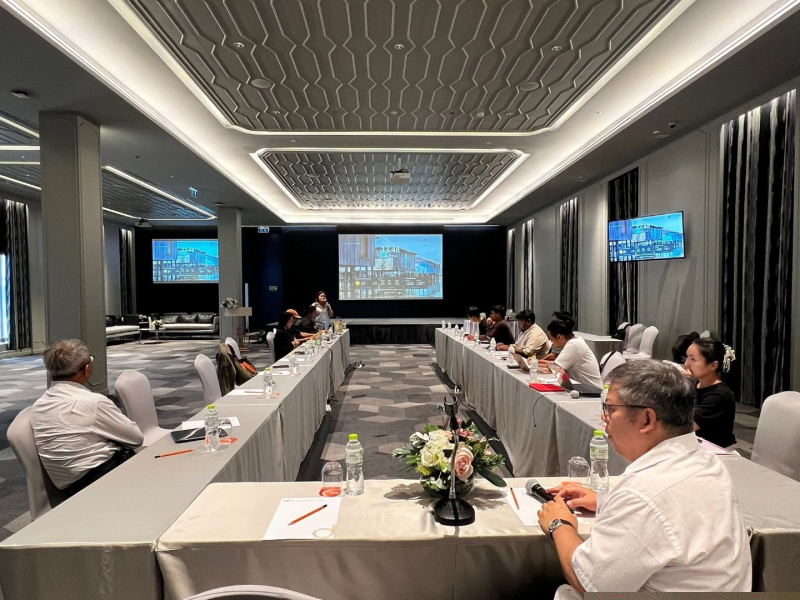
Against this backdrop, the annual meeting served as a vital forum for member organisations and observers to connect, exchange insights on media ethics governance, and share best practices. Participants reviewed the network's progress over the past year. They charted the direction for its work going forward, with the shared goal of building more resilient and sustainable mechanisms for ethical self-regulation across Southeast Asia.
Chavarong Limpattamapanee, Chairman of the National Press Council of Thailand, described the gathering as a significant milestone — one that brought regional media professionals together not only to take stock of the state of journalism in their respective countries, but also to explore the media's role in fostering peace across the region.

That theme took centre stage in a dedicated session on "The Role of Media in Promoting Peace in ASEAN," introduced by Associate Professor Dr. Alongkorn Parivudhiphongs, Deputy Dean of the Faculty of Communication Arts, Chulalongkorn University. He observed that conflict in the Mekong region and across ASEAN rarely takes the form of open warfare between states — it is more often slow-burning, rooted in deep structural inequalities, and playing out against a backdrop of regional and global tension. In this environment, journalism carries a responsibility that goes well beyond reporting facts: it shapes narratives, creates public space for dialogue, holds power to account, and can either ease or inflame social tension. Yet the promise of peace journalism, he noted, ultimately rests on the professional judgement and ethical commitment of individual journalists — especially in a world increasingly driven by conflict, technology, and algorithmic pressures.

As a public broadcaster, Thai PBS remains committed to supporting initiatives that strengthen media ethics, elevate professional standards, and promote responsible journalism — not only in Thailand, but across the wider region.